





Contingent of 15 Aussies set for the US Open at Flushing Meadows
- Chris Beardsworth
- 1 hour ago
- 8 min read

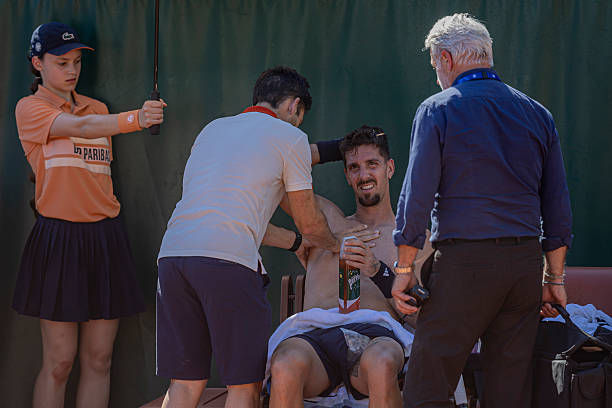
(Getty Images)
Australian tennis will be well represented when the 2026 US Open gets underway at Flushing Meadows, with 15 Aussies preparing to take their place in the singles draws.
The group includes established Grand Slam performers, some rising talent, and two Australians, Storm Hunter and Tristan Schoolkate, who battled through qualifying to earn their place in the main draw.
There are difficult assignments across the board, but also several matches where the Australians will believe they have a genuine opportunity to advance.
Look ahead to Round 1:
Taylah Preston vs. Alycia Parks (United States)
Taylah Preston arrives in New York with plenty of confidence behind her despite a difficult lead-in to the US Open.
The 20-year-old earned a wildcard into the main draw after an impressive season that included her first WTA 125 title in Vancouver, where she defeated fellow Australian Maddison Inglis in the final, and her top 100 debut.
Standing in her way is American Alycia Parks, a player capable of producing enormous power from both her serve and groundstrokes. Parks enters the contest after reaching the quarterfinals in Monterrey, defeating Petra Marcinko and Maja Chwalinska along the way. Her ability to take the racquet out of an opponent's hand makes her particularly dangerous on hard courts.
For Preston, the key will be handling the American's first strike. She cannot afford to give Parks short balls, but equally will need to be aggressive when opportunities present. Preston's movement and consistency could become increasingly important if she can drag Parks into longer exchanges.
Storm Hunter vs. Marta Kostyuk (Ukraine)
Storm Hunter has already won one of the week's battles simply by reaching the main draw.
The Australian came through qualifying with a 6-4, 6-1 victory over fourth-seeded Latvian Darja Semenistaja, earning her a place in the US Open singles main draw. Now comes a considerably bigger challenge.
Marta Kostyuk enters the tournament as the world No.11 and one of the most in-form players in women's tennis. The Ukrainian has reached semi-finals at both Roland Garros and Wimbledon this season and has also climbed to a career-high ranking of No.11. Hunter, ranked outside the top 150 in singles, will therefore enter as a significant underdog. However, this is not a player unfamiliar with the Grand Slam environment.
Hunter has enjoyed enormous success in doubles and won the mixed doubles title at the US Open in 2022.
The challenge will be to disrupt Kostyuk's rhythm. The Ukrainian loves taking the ball early and turning defence into attack, meaning Hunter will need to make the match physical and force Kostyuk to hit extra balls. A huge challenge, but qualifying momentum and the freedom of being the underdog could make Hunter dangerous.
Kim Birrell vs. Petra Marcinko (Croatia)
This is one of the more intriguing match-ups for the Australian women.
Birrell and Marcinko have already played twice this season, splitting their first two meetings. Birrell won their February encounter in Austin before Marcinko won their grass court meeting in Eastbourne in June.
That familiarity should make for an intriguing tactical battle. Birrell has built her game around her ability to defend, counterpunch and extend points, while Marcinko is capable of playing aggressively and taking the ball early. Their most recent meeting in Eastbourne was a straight-sets victory for Marcinko, but the circumstances are very different on the hard courts of New York.
Birrell will need to make the Croatian work for every point and avoid giving her opportunities to dictate with her forehand. The Australian is seeking her first singles US Open victory.
Listen to The First Serve Live every Monday at 8pm AEST in its 18th year on the SEN Network/App, Australia's only dedicated weekly tennis program on commercial radio running through till the end of November.
Talia Gibson vs. Donna Vekic (Croatia)
Talia Gibson faces a big test against Donna Vekic. Vekic brings years of experience at the highest level and is currently ranked No.36.
Gibson has continued to establish herself as one of Australia's most exciting young players, and this will be her second appearance in the US Open main draw. Vekic's ability to absorb pace and redirect the ball will make life difficult for Gibson, particularly if the Croatian can establish a rhythm from the baseline.
The Australian will need to be brave. Sitting back and allowing Vekic to dictate could prove costly, so Gibson's first strike tennis will be crucial.
Maya Joint vs Liudmila Samsonova
Maya Joint has arguably been handed one of the toughest possible first-round assignments.
She faces Liudmila Samsonova, a former world No.12 who possesses one of the biggest games in the women's draw. There is also recent history between the pair. Samsonova defeated Joint in Toronto earlier this month and also won their Wimbledon meeting in 2025.
That recent Toronto meeting is particularly relevant because it demonstrated exactly what Joint will be up against: Samsonova's ability to dictate play with her power.
Joint's challenge will be to change the pattern. The Australian is at her best when she can use her movement and consistency to force opponents into uncomfortable positions.
Against Samsonova, she cannot simply try to match power with power. Joint will need to absorb the Russian's pace, extend rallies and make Samsonova hit one extra ball.
Daria Kasatkina vs. Paula Badosa (Spain)
This could be the headline women's match for the Australian contingent.
Two former Top 10 players will meet in the opening round, with Kasatkina now representing Australia and Badosa attempting to rebuild her ranking following injury problems.
Kasatkina enters ranked No.59, while Badosa sits at No.83.The match presents a fascinating contrast in styles. Kasatkina is one of the game's great tacticians.
She uses changes of pace, angles, slices and movement to disrupt opponents rather than simply trying to overpower them. Badosa, meanwhile, prefers to dictate from the baseline and possesses the ability to hit through opponents when she is striking the ball cleanly.
The Australian will need to make the Spaniard uncomfortable and avoid getting drawn into predictable baseline exchanges.
Alexei Popyrin vs. Grigor Dimitrov (Bulgaria)
Popyrin will face former world No.3 Grigor Dimitrov in a first-round battle between two players capable of producing spectacular tennis.
The pair have already met three times, with Dimitrov leading the head-to-head 2-1. Their most recent meeting came in Shanghai in 2024, when Dimitrov won in straight sets.
The Australian, who has struggled for confidence this year and is coming in under an injury cloud, will be hoping to dictate play with his big serve and forehand. Dimitrov, however, has more variety. His movement, slice, backhand and ability to change direction can drag Popyrin away from his preferred patterns.
Dane Sweeny vs. Corentin Moutet (France)
Dane Sweeny will enter the US Open courtesy of a Wildcard. Taking on Frenchman Corentin Moutet, Moutet presents one of the more unusual challenges on the men's tour. The left-hander uses changes of pace, drop shots, angles and unconventional patterns to frustrate opponents. It can be difficult to establish rhythm against him. For Sweeny, patience will be critical. The Australian cannot afford to become frustrated if Moutet slows the match down. Instead, he will need to remain committed to his own aggressive patterns. This is the type of match where momentum can change quickly.
Thanasi Kokkinakis vs. Rafael Jodar (Spain)
This is arguably one of the most fascinating men's match-ups involving an Australian, should he get to the starting line with an injury cloud hovering over him.
Kokkinakis brings experience, power and a reputation for thriving in Grand Slam five-set battles.
Jodar, meanwhile, represents the new generation. The Spanish teenager has enjoyed a sensational 2026 season and enters the US Open ranked 13th. He has also performed strongly during the North American hard court swing.
Kokkinakis' challenge is therefore enormous. The Australian cannot afford to allow Jodar to settle into his rhythm. His serve will need to be a major weapon, while his forehand needs to consistently put the teenager under pressure.
Kokkinakis has the experience of playing five-set Grand Slam matches, while Jodar is still learning what it takes to win on this stage. The big question is, will the body of Thanasi be able to hold up?
Alex de Minaur vs. Andrea Guerrieri (Italy)
Australia's No.1 arrives in New York with expectations firmly on his shoulders.
De Minaur is seeded sixth and is ranked 8 in the world, while qualifier Andrea Guerrieri is ranked No.189.
On paper, this is one of the biggest ranking disparities in the first round. But de Minaur will know better than most that qualifiers can be dangerous.
Guerrieri has already won three qualifying matches to reach the main draw and will enter the contest with nothing to lose. For de Minaur, the priority will be simple: impose his intensity from the opening game. His speed, court coverage and ability to turn defence into offence make him one of the toughest players on a hard court.
He is also a three-time US Open quarterfinalist and holds a 22-9 record at the tournament. This is an opportunity for de Minaur to start strongly and build momentum for what he hopes will be another deep run.
Rinky Hijikata vs. Felix Auger-Aliassime (Canada)
Perhaps the toughest men's assignment for an Australian. Rinky Hijikata has drawn world No.4 and third seed Felix Auger-Aliassime.
Auger-Aliassime brings enormous firepower, particularly from his serve and forehand. The Canadian's ability to win cheap points makes him incredibly difficult to break when he is serving well.
Hijikata's best chance will be to turn this into a physical baseline battle. The Australian is capable of absorbing pace and extending rallies, but he cannot afford to simply defend.
He needs to find ways to get Auger-Aliassime moving and make him hit uncomfortable shots. Hijikata also has positive US Open memories, having reached the second week in 2023.
Tristan Schoolkate vs. Nishesh Basavareddy (USA)
Schoolkate arrives after one of the most dramatic qualifying wins of the Australian campaign.
He survived a nearly three-hour battle with Canada's Liam Draxl, winning 4-6, 7-5, 7-6(7) to reach the main draw. Now he faces American Nishesh Basavareddy. Basavareddy has also come through qualifying and enters the match with plenty of momentum.
He defeated Arthur Gea 6-3, 6-1 in the final qualifying round. The pair have met previously, with Basavareddy holding a 1-0 advantage. This could be one of the more evenly matched men's contests involving an Australian.
Schoolkate will need to recover physically from his qualifying campaign while maintaining the aggressive approach that got him through.
Aleksandar Vukic vs Rei Sakamoto
Aleksandar Vukic has been handed an opportunity against Japanese youngster Rei Sakamoto. The Australian is the higher-ranked and more experienced player, and he also won their only previous meeting in qualifying in Tokyo last year.
Vukic's serve will be a major weapon, particularly if he can establish a high first-serve percentage and shorten points. Sakamoto's speed and consistency could create problems, but Vukic should be confident that he can dictate with his first strike. This is exactly the sort of match Vukic needs to take advantage of if he wants to make progress up the rankings.
James Duckworth vs. Matteo Arnaldi
James Duckworth faces one of the most difficult seeded opponents among the Australian men.
Matteo Arnaldi is seeded 30th and ranked 34th.
Duckworth comes into the US Open after reaching the quarter-finals in Winston-Salem. However was forced to retire due to a leg injury.
If healthy, the Australian's serve and aggressive first-strike tennis could be particularly effective in New York.
Arnaldi, however, is an excellent mover and possesses the ability to extend rallies and force opponents into uncomfortable positions. Duckworth will want to keep points short wherever possible.
If he can protect his serve and put pressure on Arnaldi's second delivery, the Australian has a genuine chance of producing one of the tournament's early upsets.
Adam Walton vs. Yibing Wu (China)
This could quietly become one of the most competitive Australian matches of the opening round. Walton and Wu have never met, and the rankings are close enough to suggest there is very little separating them. Wu has enjoyed success at Flushing Meadows before, famously reaching the third round in 2022.
The Chinese player's flat ball striking and ability to take the ball early could create problems for Walton. The Australian, however, offers greater physicality and consistency, and has been able to build plenty of match experience throughout the season.
This could come down to who controls the baseline and who handles the big moments better.
Tickets to the 2027 Kooyong Classic are officially on sale! 🎾 12–14 January 2027. Buy your tickets here 👉 bit.ly/4xEDn7p



Comments