





'Doubles isn’t a carnival sideshow. It is one of the most successful parts of tennis – integral to the amateur game'


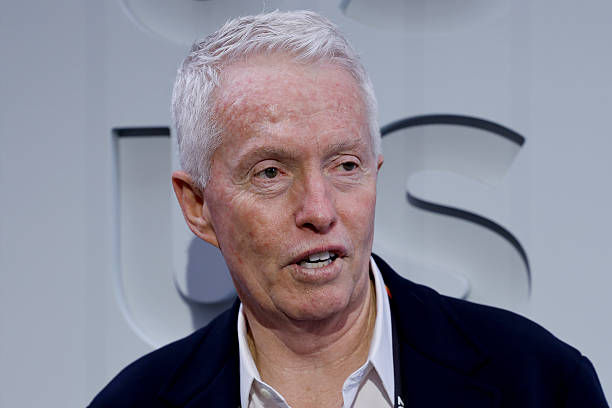
(Photo by Adam Pretty/Getty Images)
As the ATP is in the midst of planning its new look calendar for 2028, it also includes a significant shift as far as its doubles product is concerned.
Reported by Ben Rothenberg of Bounces this week, the ATP is putting plans in place to diminish doubles going forward, with proposals presented to the ATP Player Council at the Masters 1000 in Rome, and ATP doubles players have met with their representatives on the Council on Tuesday at Wimbledon.
A plan called "Product 28" targets a reduction of ATP doubles draw sizes and the share of prize money allotted.
What is being proposed
According to the players, the ATP’s plans for 2028 include:
• Halving Masters 1000 doubles draws to 16 teams.
• Halving doubles draws to just 8 pairs at ATP 250, 500 and Challenger level — down from the current fields.
• Giving singles rankings priority over doubles rankings for Challenger entry, squeezing out dedicated doubles players even at the sport’s development level.
• Reducing the prize money split from 80/20 to 90/10 between singles and doubles — leaving doubles pairs just 5% of a tournament’s prize pot each. To put this in context, this year the singles winner at Indian Wells won $1,151,000 while the winners of the doubles shared $468,000 ($234,000 each). The ATP’s plans will see the winners of the doubles reduced to just $234,000 ($117,000 each), while the singles pots will increase 10%.
• Redirecting the money saved into first-round singles prize money at Masters events.
Notably, all four Grand Slams are understood to want to preserve men’s doubles as it stands — leaving the ATP’s own membership tour isolated in pushing to shrink the discipline it says is unsustainable.
A group of the ATP Tour’s leading doubles players has issued a joint statement condemning new ATP proposals that would slash draw sizes, strip prize money from doubles specialists, and — in the players’ words — make it “effectively impossible” to build a career in professional doubles.
The players’ statement
“Doubles isn’t a carnival sideshow. It is one of the most successful parts of tennis – integral to the amateur game - with the potential to do so much more. Yet the impact of the ATP’s proposals will be to diminish the sporting excellence that is professional doubles and turn off the pipeline of pro doubles players and the entire infrastructure that supports them.
The ATP is proposing to slash doubles draws, gut doubles prize money, and hand Challenger entry to singles players ahead of specialists who have built their careers in this discipline.
Under a 90/10 split, a doubles pair would be left splitting just 5% of prize money each between two players, while singles players competing in the same draw take the other 90% alone. Do the math on what that means for anyone outside the top 30: it will be impossible to make a living.
This is not a minor adjustment. It is a plan to end doubles as a viable profession, dressed up as a cost-saving measure — and it is being pushed through with almost no transparency and almost no consultation with the players whose careers and livelihoods are on the line.
It will close the pathway for aspiring doubles players into Challenger events and make it almost impossible for anyone outside the top 30 ATP doubles rankings to make any kind of living. It will have a massive impact on the development pathways of national governing bodies, too, and the people they employ.
We are told doubles lose money. We are not told the workings behind that claim, and we do not believe it reflects the full picture of what doubles brings to the sport commercially, competitively or in fan engagement. We have repeatedly offered to get involved with the marketing of our sport, offers that the ATP has repeatedly rejected. Instead, we see lacklustre marketing of doubles, failure to exploit broadcast and other commercial partnerships, and poor event staging and promotion.
Every one of us has dedicated our lives to this sport: years of training, relentless travel, and sacrifices most fans never see. Doubles is not an afterthought we fell into. For many of us, it is where we have found our greatest success, and where tennis has found some of its most thrilling matches — at every Grand Slam, every Olympic Games, every Davis Cup and Billie Jean King Cup tie. It has always been part of this sport’s identity, not a discount version of it.
And this isn’t just about us. Shrink doubles and you shrink the livelihoods of the coaches, physios and trainers who work alongside us, the national federations who develop doubles talent, the clubs who run doubles programmes, and the next generation of players who see a doubles career as a genuine, achievable path into the professional game.
The ATP is fond of telling us that tennis has never been in a stronger commercial position than it is right now. This is exactly the wrong moment to start dismantling one of its most important pillars. Rather than forcing us to consider our legal options, we call on the ATP to halt these proposals and sit down with us, its members, with the aim of actively growing and developing our fantastic sport.”
Listen to The First Serve Live every Monday at 8pm AEST in its 18th year on the SEN Network/App, Australia's only dedicated weekly tennis program on commercial radio running through till the end of November.
The numbers the ATP proposal ignores
The players point to a run of statistics that they say undercut the ATP’s framing of doubles as expendable:
• Doubles is how most people actually play tennis. A 2024 survey of tennis fans and players found nearly 70% play doubles, against just over 40% who play singles — and organised recreational leagues reflect this: USTA adult league team matches in the US are built around two or three doubles rubbers for every one or two singles rubbers, meaning most competitive matches played in the sport’s largest recreational structure are doubles by design.
• Doubles careers are longer, and that’s a selling point, not a flaw. Spain’s Marcel Granollers and Argentina’s Horacio Zeballos won two Grand Slam titles together in their late thirties; Italy’s Simone Bolelli, 40, became his country’s first man to reach 20 tour-level doubles titles this year — giving fans years, sometimes decades, of storylines singles rarely offers.
• Doubles success now spans the entire tennis-playing world. Britain’s Henry Patten and Finland’s Harri Heliövaara are the reigning world No. 1 team; Granollers became only the second Spanish man ever to top the doubles rankings and Zeballos the first Argentine man in history to do so; Bolelli and Andrea Vavassori became the first Italian pair to win the Rome Masters doubles title in the Open Era. This is a discipline producing new national milestones every season.
• The sport itself is booming, which makes the timing harder to justify. The ATP itself describes 2025 as a landmark year, with a record 5.55 million on-site fans, a global broadcast and streaming audience of more than a billion, and player compensation at record highs. Global tennis participation has passed 100 million players, up more than 25% in five years. Cutting doubles now is not a response to a shrinking sport — it is a choice, made inside a sport that is growing.
The proposals described were presented by the ATP to doubles players on 30th June at Wimbledon. They would commence in the 2028 ATP Tour season. Statistical information is from ATP Tour, LTA, USTA and International Tennis Federation data, current as of June 2026.
The legendary Kooyong Classic will be back 12-14th January 2027 at the spiritual home of Australian tennis. Hospitality packages on sale now at www.kooyongclassic.com.au


A compelling, passionate defense of doubles tennis. It brilliantly highlights its value to the amateur game and rich history, proving it is vital, not secondary, to the sport.For more updates, check out bombanana.
It's a shame to see doubles getting cut back; the sport feels richer when all parts thrive. Speaking of thriving, I’ve found math Interactive tools super helpful for making numbers fun at home.