





How one Challenger final became a landmark moment for men's tennis

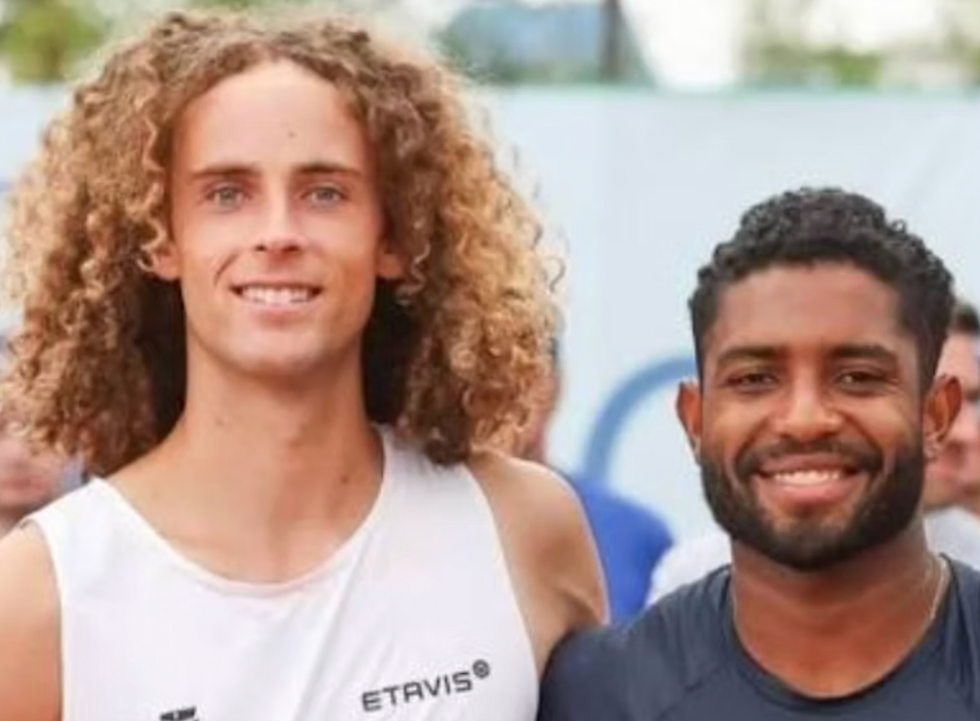
Hours before the tennis world turned its attention to Ben Shelton and Alexander Zverev in the US Open final, another men's title match was unfolding at the NÖ Open Challenger in Tulln, Austria.
The tournament was being played on a nondescript clay court in a town of around 16,000 people, but the occasion was almost as historic as the one in New York.
The final pitted Brazilian João Lucas Reis da Silva against 21-year-old Swiss Mika Brunold.
Reis da Silva had entered the week ranked No.282 in the world, while Brunold was No.410 and had come through qualifying just to reach the main draw.
On almost any other weekend, a final between two players at those rankings would pass largely unnoticed beyond hardcore tennis fans, but this one was different. Reis da Silva and Brunold are the only two active ATP-ranked male players who have publicly come out as gay.
Sunday's final was the first known professional men's match between two openly gay players, and remarkably, it was also their first meeting.
Neither had taken an easy path to get there.
Listen to The First Serve Live every Monday at 8pm AEST in its 18th year on the SEN Network/App, Australia's only dedicated weekly tennis program on commercial radio running through till the end of November.
Brunold came through qualifying before beating several seeds on his way to the championship match, while Reis da Silva had to overcome top seed and top 100 player Alex Molčan en route to the final.
Tony Hagen, host of The Gay Tennis Podcast, had been following their progress throughout the week.
"I was surprised and impressed," Hagen told The First Serve.
"They both should walk away feeling, excuse the pun, proud of how they played this week."
From inspiration to opponent
Reis da Silva became the first active male professional tennis player to publicly come out in December 2024.
Since then, the Brazilian has played qualifying at all four Grand Slams, represented his country in Davis Cup, competed at ATP Tour level, won his first Challenger title, and climbed as high as No.187 in the world.
His visibility also had an impact on another player.
Brunold publicly came out in November 2025, later explaining that Reis da Silva had been an inspiration to him.
Less than a year later, they were playing each other for a Challenger title.
Brunold won the final 6-4, 6-3, completing a seven-match run from qualifying to claim the first Challenger title of his career.
During the trophy ceremony, Brunold turned to Reis da Silva and acknowledged the significance of what they had just shared.
"I want to thank you," he said. "One year after your coming out, I did too. You were a big inspiration for me."
Then came the line many people have since seized on.
"I'm really proud of us."
Hagen said the moment elevated an already significant match.
"We've never had two openly gay pro male players compete against each other at this level," he said.
"So to have the first match between two gay male pros be at the final stage, it makes it more high-profile.
"And we got to hear Mika publicly thank Joao for inspiring him to come out during his trophy ceremony. It felt like a huge moment for the sport."
The historic final quickly made headlines internationally, from LGBTQ+ media to major outlets including The Athletic.
Why does it matter?
For many tennis fans, there is an obvious question: Why should a Challenger final between two players ranked well outside the top 200 attract this much attention simply because both men are gay?
Jon Holmes, founder and lead of Sports Media LGBT+, says that misses part of what makes the moment significant.
"I don't think it's just because they're gay," Holmes told The First Serve.
"It's because they're publicly out gay men who, in their own words, are fully aware of the impact they are having and will continue to have."
Both players have spoken about receiving messages from people who have been encouraged by seeing openly gay men competing in professional tennis.
Reis da Silva himself has previously spoken about wishing he had been able to see someone like himself in the professional game when he was younger. His decision to live publicly ultimately helped Brunold do exactly the same.
"They were once looking for that inspiration; now they are providing it," said Holmes, who believes their success since coming out is an important part of the story.
"The coming-out stories of Joao and Mika weren't just celebrated by gay people. There was wider acknowledgement of their significance," he continued.
"So for both men to make a final really underlines the benefits of being yourself. It's not just that they went public, but that they are making progress in their careers and achieving more as out players."
Tickets to the 2027 Kooyong Classic are officially on sale! 🎾 12–14 January 2027. Buy your tickets here 👉 bit.ly/4xEDn7p
The contrast with women's tennis is stark. The women's game has had prominent openly gay players for decades, including some of the biggest names the sport has produced, while publicly out players on the active men's tour have been exceptionally rare.
Reis da Silva and Brunold have both described the environment around them in professional tennis as largely accepting.
For Holmes, that means the conversation is now more complicated than simply asking whether men's tennis is homophobic.
"Even acceptance doesn't necessarily lead to greater representation," he said.
"Mika in particular was up front about hostile DMs he received on Instagram earlier last year, so it's also helpful for other gay and bi male players to know that yes, this does happen to other people but no, it shouldn't stop you from being true to yourself."
A response bigger than Tulln
If there was any question over whether the final would resonate beyond LGBTQ+ tennis fans, the response online provided an answer.
Hagen said the reaction to Brunold's speech in particular had surprised him.
"I've been genuinely shocked by how large of a response I’ve seen online and received on my platforms," he said.
"Queer fans and straight fans alike seem overwhelmingly positive to this result and ready to see the players succeed in the future."
For Holmes, moments like Tulln matter because sporting milestones provide a visible marker of change.
"This is a milestone for men's pro tennis, and you will always find marginalised and under-represented communities celebrating milestones," he said.
"They are the signposts towards the more equal society that we aspire to."
And after a week in which their sexuality understandably became part of the story, the next goals for both players are much more familiar ones.
Brunold's title has lifted him 153 places to a new career-high ranking of No.257, while Reis da Silva has risen to No.220.
Hagen hopes the next breakthrough comes on a considerably bigger tennis stage.
"João has competed in Grand Slam qualifying tournaments, and I would love to see him or Mika make a Slam main draw and get into the top 100," he said.
"And bigger picture, I want to see more male players coming out and showing support to their fellow gay players."
For Brunold and Reis da Silva, the immediate goals are likely the more conventional ones of climbing rankings, reaching bigger tournaments, and seeing how far their tennis can take them.
But whatever comes next, their match in Tulln is now part of tennis history.
Brought to you by HEAD, Your Game Is Their Game. Find all the latest HEAD tennis, padel, pickleball and squash products now at www.head.com


Comments