





Is the tennis calendar feasible for players? And why are players being ignored?

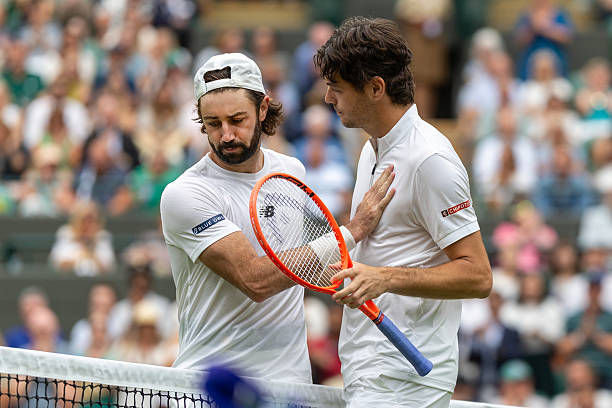
The hectic tennis calendar across the ATP and WTA tours has been a topic of conversation among players, coaches and fans for a while now. Many criticise the sheer amount of tournaments paired with the quick turnaround times across different surfaces, where players are constantly on the road.
With the lengthy tennis season comprising most of the year, as well as the implementations of longer tournament formats and mandatory events, the ability for players to perform at their peak year-round becomes increasingly challenging.
This begs the question: Is the current tennis calendar feasible for players to consistently perform at their best?
This year, the 2025 ATP tour calendar features 60 tournaments across 29 countries. To earn ranking points, players are expected to compete in the following, according to the official ATP website:
"The breakdown - for singles and doubles – includes 19 events for all players. *In singles, the Nitto ATP Finals is an extra event (20th) in the ranking breakdown. Top players who compete at all mandatory events will have the following breakdown: One (1) Nitto ATP Finals* (additional event in the ranking breakdown), Four (4) Grand Slams, Eight (8) mandatory Masters 1000s, Seven ‘Best Other’ (ATP Cup, ATP Masters 1000 Monte Carlo, ATP 500, ATP 250, Challenger, ITF)," the ATP explains.
The 2025 WTA tour calendar features 51 tournaments across 26 countries and regions. To earn ranking points, players are expected to compete in the following events from the official WTA website:
"For the top-ranked singles players the ranking points breakdown includes the following: Four (4) Grand Slams, Best Six (6) combined WTA 1000s – Indian Wells, Miami, Madrid, Rome, Toronto/Montreal, Cincinnati, Beijing, Best (1) non-combined WTA 1000 – Doha, Dubai, Wuhan, Next best seven (7) results from WTA 1000, WTA 500, WTA 250, WTA 125 and ITF tournaments. Points earned from the WTA Finals will count as an additional 19th tournament," it reads.
Shop with a 15% storewide discount code: SERVE15 - excludes clearance items, machines, court equipment and gift cards at www.tennisdirect.com.au
Many top players have already expressed their frustration over the crowded schedules, as well as new rules regarding mandatory events.
Taylor Fritz recently spoke out before the National Bank Open about the rules regarding how many tournaments are mandatory to play in a year, and how it affected his decision to compete in Washington.
"It's a tough time of year because there's no week where it makes sense to take a break," Fritz commented.
"There are thousands, and to be honest, last week, and don't get me wrong, I really like Washington, and I like playing the tournament, but with how tight my schedule was on the grass court, I probably should have decided not to participate.
"But there's a new rule that says you have to play a certain number of 500 events, or they put a zero on your record. Because I was injured during the year, I missed two 500s, so I had to play in Washington to have a chance to meet my ATP 500 quota for the year.
"I'll be honest, I don't think it's the best policy because I had an injury earlier this year and felt like a week off would have been great. A lot of the guys are prioritising the US Open and don't want to come here, play this tournament, play in Cincinnati, and be exhausted for the US Open."
Earlier in the year, after competing in Dubai, world No.3 Iga Świątek also voiced her concerns about the congested tournament calendar, citing the difficulty of performing consistently at a high level.
"I'm not surprised. It's definitely a matter of the calendar. We won't be able to play at a high level for so many years, week after week," Świątek stated.
"The calendar doesn't help. We're constantly moving between continents. We're changing surfaces and balls. It's not easy."
Despite concerns over the tournament calendars, both the ATP and WTA tours have made changes that include more Masters events being played over two weeks.
The ATP and WTA unveiled the inception of the National Bank Open and Cincinnati Open, expanding to 12-day formats. Now, seven of the nine ATP Masters 1000 events will utilise the 12-day format. Similarly, seven of the 10 WTA 1000 events are also being played over two weeks.
World No.3 Alexander Zverev has made his stance clear through the media on multiple occasions about his disapproval of the two-week events.
"We don't even get a full month off from tennis," said Zverev, who has been vocal about the topic.
"How can you take the time to prepare your body for the new season? There's no time for that anymore; it's become impossible these days. The ATP needs to think about all this and find a solution. To be honest, I've never heard a single player say that the two-week Masters
1000 format is a good idea. And I'm not even sure tennis consumers and fans in general like it either."
Ben Shelton recently celebrated his first ATP Masters 1000 tournament victory in Toronto. Yet whilst speaking to the press after his round of 16 win, he expressed his thoughts on the lingering issue.
"The level is definitely higher in those one-week tournaments when you're playing two out of three sets and you're playing back-to-back days, you get into a consistent rhythm of playing," Shelton stated.
"It's tough with the start and stop, and I think that a combination of those things is probably what players are talking about and what's throwing a lot of guys off."
Earlier in the year, whilst competing at the Barcelona Open, five-time major winner Carlos Alcaraz also voiced his distaste over the elongated Masters events.
"The one-week ones are better," Alcaraz said.
"Some will think that in two weeks there are days of rest, but that is not the case… It's two full weeks. That's why I prefer the one-week Masters 1000. For me, it's better for tennis."
Last year, Stefanos Tsitsipas also posted his frustrations on X, writing: "The two-week Masters 1000s have turned into a drag. Players aren’t getting the recovery or training time they need, with constant matches and no space for the intense work off the court.
"It's ironic that the @atptour committed to this format without knowing if it could actually improve the schedule, but the quality likewise. Paris got it right, done in a week. Exciting and easy to follow. Just how it’s supposed to be."
However, there are benefits to the longer tournament format for these Masters events. The longer format also means a bigger draw, where lower-ranked players have a heightened chance of being able to compete, as well as a better division of prize money and ranking points amongst a larger pool of players.
The First Serve's Brett Phillips spoke to the National Bank Open (Toronto) tournament director Karl Hale live on air for insight into the Canadian swing, delving into the decision-making process behind the prolonged events and how they are needed to push tennis forward in the global scene.
"Tennis fans, they really have to understand our position in sport, and sports like the [English] Premier League [football], NBA [basketball], all of these major sports are leaving us behind, that this is the way to go if we wanna maintain our status in the global scene of sport," he said.
Hale further discussed the philosophy behind making the Masters events "bigger and better" as a response to what ATP Chairman Andrea Gaudenzi envisions for a better product.
"I think what Andrea [has] done has basically said you have to start with the bigger events," he said.
"There are premier sporting events on the tour [Grand Slams/Masters], so you gotta work with those events first and then go back to the 500s and 250s. They have a place, they're important for our tour. Our tour is very unique…we're all over the place and people are travelling all the time, so start with the big events, work on that schedule. Make them bigger, make them better, and then in the calendar, where can you soften it so the players have more rest?"
The Grind with Roddy Reynolds and Alex Osborne takes a deeper look at the ATP Challenger and ITF Tours – The First Serve Podcasts
Unlike other sports, which have specific off-seasons, the tennis calendar has expanded to players spending the vast majority of the year competing. The ATP and WTA Tour seasons typically last from late December or early January until November. This means the typical player is travelling, training, and competing for around 11 months a year.
With limited rest and a short off-season, players are experiencing increased physical and mental strain from competing essentially all year. With the way that the calendar is set up and the rules surrounding mandatory events and ranking points, players cannot afford to give up longer periods on tour. At the end of the year, in order not to lose points, players generally need to play at least 19 tournaments per season.
The current tennis calendar is straining for the players, making it difficult for them to perform at their very best week in and week out. Perhaps the new direction of the ATP and WTA tours, with a focus on the bigger events such as the Masters 1000s can help alleviate the tennis calendar and make it easier for players to compete at their best during the whole season.
Experience the perfect blend of passion and performance at Racquet World, the ultimate destination for tennis enthusiasts throughout Australia.
Explore their extensive selection of Tennis, Padel, and Pickleball gear. For all First Serve listeners, by entering the code TFS2025, you will receive 15% off the RRP on all non-sale items at their online store - www.racquetworld.com.au


Comments