





Their name or number doesn't matter: Coaching against the tour kingpins
- Val Febbo

- May 19
- 4 min read
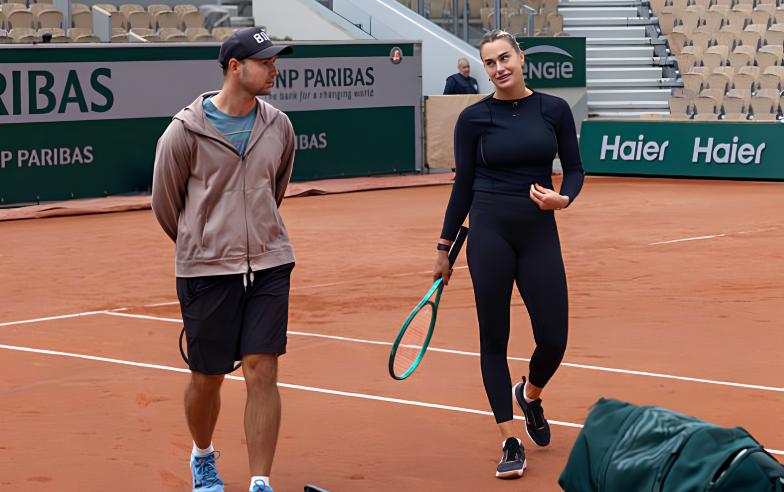
Tennis has long been dominated by the likes of the Big Four and Serena Williams, while Carlos Alcaraz, Jannik Sinner, Iga Świątek and Aryna Sabalenka have taken the mantle as the tour level kingpins.
With their stranglehold on tennis, it can make it mightily difficult for opposing players to front up mentally or maintain the belief that they can compete for some of the sport's big titles.
That's where coaches come in, the most important part of a player's entourage that assists in forging game plans and formulating ways for one to overcome their opponents, no matter what level they play at.
Marc Sophoulis, one of the premier high-performance coaches in Australia, has coached on both tours and guided a plethora of juniors through their formative years on tour.
The Victorian says that taking matches one at a time is incredibly important, ensuring that even if one is scheduled to tackle the task of a titan in the second round, the player must focus on their opening contest and how they can get the best out of themselves.
"You don't want to be chasing anyone, you kind of just want to be chasing a better version of you every time you step on the court," Sophoulis told The First Serve.
"When you look at a tournament, you're not just going to play two guys; there are so many that you need to take on.
"So it's about just keeping your eyes down and looking literally at yourself and how you can keep improving.
"You just never know what may happen if you keep improving and you play against one of them in one of these events.
"They may have a bad day, and you know, you may have a good day, so being the best version of yourself is the key."
Listen to The First Serve Live every Monday at 8pm AEST in its 18th year on the SEN Network/App, Australia's only dedicated weekly tennis program on commercial radio running through till the end of November.
Sophoulis strives to ask his pupils to look at short-term goals as building blocks to form the fundamentals of their game, creating confidence for their future aspirations.
He guides players away from looking ahead because it can set unrealistic expectations in their minds.
"If you keep looking too far ahead, it almost becomes unrealistic for players," he said.
"I'm more inclined to look at shorter-term, little things we're trying to achieve and keep them motivated.
"If I said to a young student that in 10 years I want you to be aiming to be in the top 100, but it's just too far to look ahead, it's too hard for them to understand and to conceptualise. So you keep the goals as possible."
When it comes to narrowing the gap between a player and the sport's top stars, Sophoulis believes there are multiple ways for players to gain ground on the ones they are striving to catch.
"I don't think there's one thing, I look at the technical, tactical, physical, and psychological areas of the game and then work out what they're really good at," he explained.
"From there, I’ll continue to hone in on that, give them some confidence and belief that what they've got is really good and then I also look at how we work on a couple of small wins for this week.
"Those may be improving first serve percentage or wondering strategically how we break down a player, it just depends on the week and where you're at in terms of your periodisation of the plan."
In terms of juniors, the coach is a firm believer in developing the psychological aspect of their game to gain many advantages on court.
There are several mental aspects to work on, and sometimes it comes down to keeping it simple.
"I'm not sure if that's the topic of the belief side of it, but we work on actual psychological aspects, whether it be with a psychologist or just on court ourselves and try to remain process-driven," Sophoulis said.
"I think the biggest thing that we all get carried away with is outcome in media land and external stakeholders, whether that be gambling companies or whatever wants to buy into the favouritism, who's the favourite and who's going to win.
"For us as coaches, we don't even look at that. We say it's just another player, a name, a number and nothing different to any other match because they have two arms, two legs and two eyes.
"I say that we're playing against someone that has the same tools as we do, but we've just got to go out there and have a plan that's going to be able to dismantle them."
Watching the current crop of superstars is something that Sophoulis encourages, but not because of the outcomes.
It is about viewing patterns and strategies throughout matches because that is what the next generation can take and implement while they develop their skill set.
"I get them to watch but not watch the outcomes because it's really easy to get caught up in a skill set that these players can do that young juniors can't actually achieve just yet, whether that's because of their physicality or their lack of skill set at that time and their craft," he added.
"So you're watching patterns, how they go about their mental processes and what their routines are. They're the things I highlight rather than just the points themselves.
"That to me is a really important part to get them to understand what players do to win and what patterns they use and what routines they have, as well as how they slow the game down and speed it up when they've got momentum."
Ultimately, there are plenty of ways to maintain motivation and ensure that, despite maybe not being a favourite against a current champion, there are ways to keep motivated and facets of your game to focus on.
Game4padel is where Melbourne plays Padel. Check them out at game4padel.com.au for club locations, corporate event opportunities and special offers.


I’ve been following tennis closely for years, and it’s amazing how the new generation like Alcaraz and Swiatek has taken over. But honestly, even the best players need smart strategies to win consistently. A friend of mine who bets on sports told me that understanding odds and having a solid plan is just as important as what happens on the court. He recently shared a link about usdc worldcup betting and explained how using crypto can make transactions faster and more transparent. I never thought about combining football betting with USDC, but it actually makes a lot of sense. Just like a coach helps a player break down an opponent’s weaknesses, finding the right platform helps you manage risk and…
Late-night browsing through AU gambling forums led me into a surprisingly thoughtful discussion about how players choose gaming clubs they can trust long term. Instead of exaggerated praise, the comments focused on realistic usability details — stable mobile performance, clear payment structure, and whether navigation remains intuitive after extended use. One participant pointed out that some casino interfaces become visually tiring because of constant banners and aggressive animations, while calmer layouts feel much easier to navigate late at night. During a broader comparison between different gaming environments, Slota Casino was mentioned casually as one of the platforms associated with a steadier overall experience. The mention didn’t interrupt the flow of the conversation or feel forced in any way. Reading through…