





'Tennis needs lots of different voices to stay prominent': Who tells tennis' story?


Tennis has had plenty of defining storytelling moments throughout its history.
In years gone by, these stories were solidified at the Grand Slams and witnessed by fans who walked through the gates or watched, enthralled, on television at home.
If you missed it, you could catch a highlights package or read the top stories in the newspaper the next day.
Nowadays, storytelling in tennis extends beyond the matches themselves, with a huge online audience following every aspect of the sport year-round.
In fact, the global online audience "dwarfs" on-site attendance, according to experienced commentator and broadcaster Peter Marcato.
"You think about how many fans actually arrive on site — I think it was 1.3 or 1.4 million people — and then measure that against the global television and online audience in terms of social media engagement, that number dwarfs the 1.3 million that actually attend on site," he told The First Serve.
"So when 95 per cent of your fan engagement comes from people who aren't going to be actually attending in person, you then need to shift your focus to those people to make sure that they're still getting the same or similar Australian Open experience."
Listen to The First Serve Live every Monday at 8pm AEST in its 18th year on the SEN Network/App, Australia's only dedicated weekly tennis program on commercial radio running through till the end of November.
Tournament organisers have recognised this shift in fan engagement, leading to more investment in making sure every court and every storyline can be covered. Case in point, ESPN recently introduced RedZone at the 2026 US Open, a whip-around broadcast that jumps between courts to show the biggest moments as they happen.
Marcato said this wasn't possible in years gone by, adding that technology has made it possible.
"Thirty or 40 years ago — not happening," he said. "Now we have the technology to do that, but also it's the vast machine behind it that can make use of technology to pick up moments that happen on court."
The result is a tennis audience that is increasingly fragmented — but also potentially much larger.
Some fans still want to sit down and watch five hours of a Grand Slam epic. Others might want a 10-minute condensed version, a collection of highlights or a 30-second clip of the moment everyone is talking about.
"You're just catering to the different sections of your audience and what they're looking for," Marcato explained. "You try and broaden your audience that way by meeting them there rather than saying everyone has to sit and watch five hours."
That change is also reshaping what it means to tell a story.
For broadcasters and commentators, Marcato believes the starting point is a commitment to doing more than simply describing what is happening on court.
"The overarching one is the commitment for broadcasters — whether it's TV, radio, online, it doesn't matter — the willingness to want to tell the story," he said.
"And whether it's the story of the tournament, more importantly the story of the players, I think the investment that goes on behind that is a big thing."
Technology has made it possible to follow those stories in a way that was previously unimaginable.
A player can now be followed from the moment they arrive at a Grand Slam, through practice, their warm-up, the match itself and the emotional scenes afterwards.
"We can watch the players arrive on site; we have the ability to watch them go and practice," Marcato said. "We can watch them warm up before their match; we can see them walk out onto court… and then come back and see the emotion that happens backstage."
Tickets to the 2027 Kooyong Classic are officially on sale! 🎾 12–14 January 2027. Buy your tickets here 👉 bit.ly/4xEDn7p
The result is a narrative that can stretch across an entire tournament rather than being reduced to a result in the newspaper the next morning.
And that storytelling no longer belongs exclusively to broadcasters or journalists.
Players themselves are increasingly becoming media organisations, using social media, podcasts and YouTube to tell their own stories directly to fans.
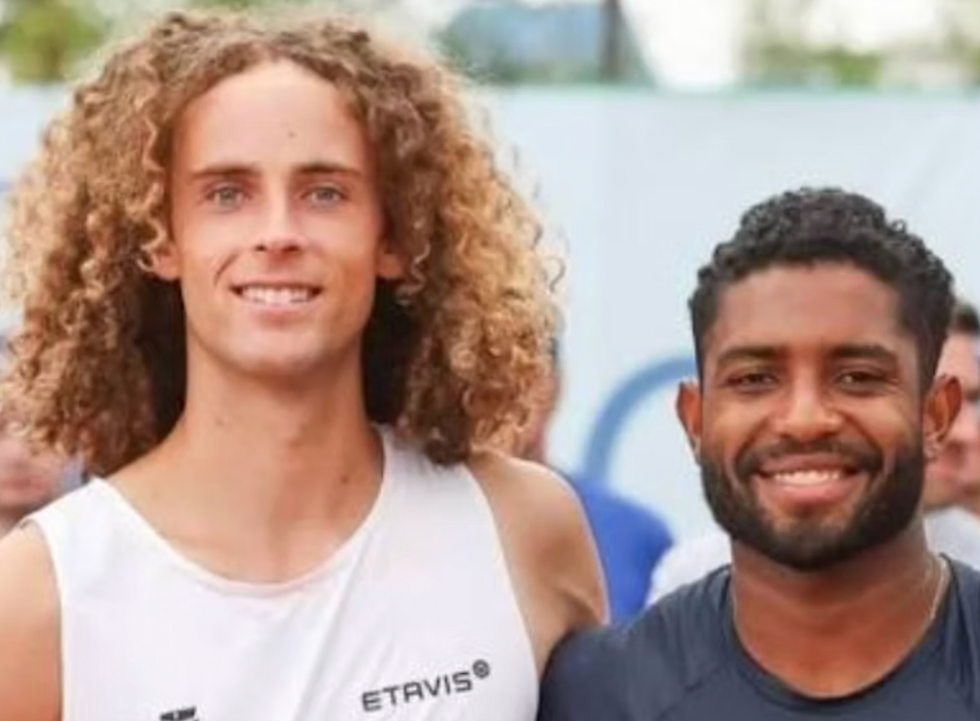
Andy Murray has launched his own YouTube channel, while players including Jessica Pegula and Madison Keys have embraced podcasting. Australian duo Dane Sweeny and Calum Puttergill have used Life on the Tour to offer an insight into the realities of life as a professional tennis player.
Marcato sees that as a positive development.
"Players being able to go directly to the fans and curate their content — oh, it's fantastic," he said.
"Tennis is a year-round sport, so it is important that we hear lots of different perspectives on that particular sport."
That matters because tennis is competing for attention in an increasingly crowded sports marketplace.
"There are all these different segments now that we can hear from," said Marcato. "Tennis needs to have its voice and lots of different voices from all over the world to really stay prominent."
That brings us back to the Grand Slams themselves.
The modern major is no longer simply a collection of tennis matches. The Australian Open, US Open and other Grand Slams have evolved into enormous entertainment events, with music, food, fashion, celebrity appearances, digital content, fan zones and experiences surrounding the competition.
Marcato describes this as the "festivalisation" of tennis.
"Remember that these majors in particular are events — they're not just tennis tournaments anymore," he said. "They are events, and there's a lot of stuff that happens around the matches going on."
Some might argue the sport risks becoming "too festivalised". But for tournament organisers, the logic is straightforward: the modern fan can choose how deeply they want to engage.
Someone can spend an entire day watching matches. Another person can come for the atmosphere, see a few games, eat, listen to music and leave with a completely different experience.
"You're trying to broaden the base of people who want to interact with not just the tennis tournament but the event that goes on around it," Marcato said.
It is a philosophy that could be seen across Flushing Meadows last fortnight. The US Open (and every Grand Slam) is simultaneously a sporting competition, a television production, a social-media machine and a live entertainment experience.
Perhaps that is where the future of tennis storytelling lies.
Marcato firmly believes the sport doesn't necessarily need one definitive voice anymore. It needs many of them — broadcasters explaining the drama, journalists providing context, players revealing their personalities and creators finding stories that traditional coverage might miss.
Everyone loves a good story, and tennis is no different. The challenge for the sport is no longer finding stories to tell.
It is making sure there are enough people telling them.
ASTE (Australian Synthetic Turf Enterprises) is Melbourne’s tennis court construction specialist.
One game and you will know the difference.
Play on a court you’re proud of, play on an ASTE court.
Head to www.aste.com.au to discover more.



Comments